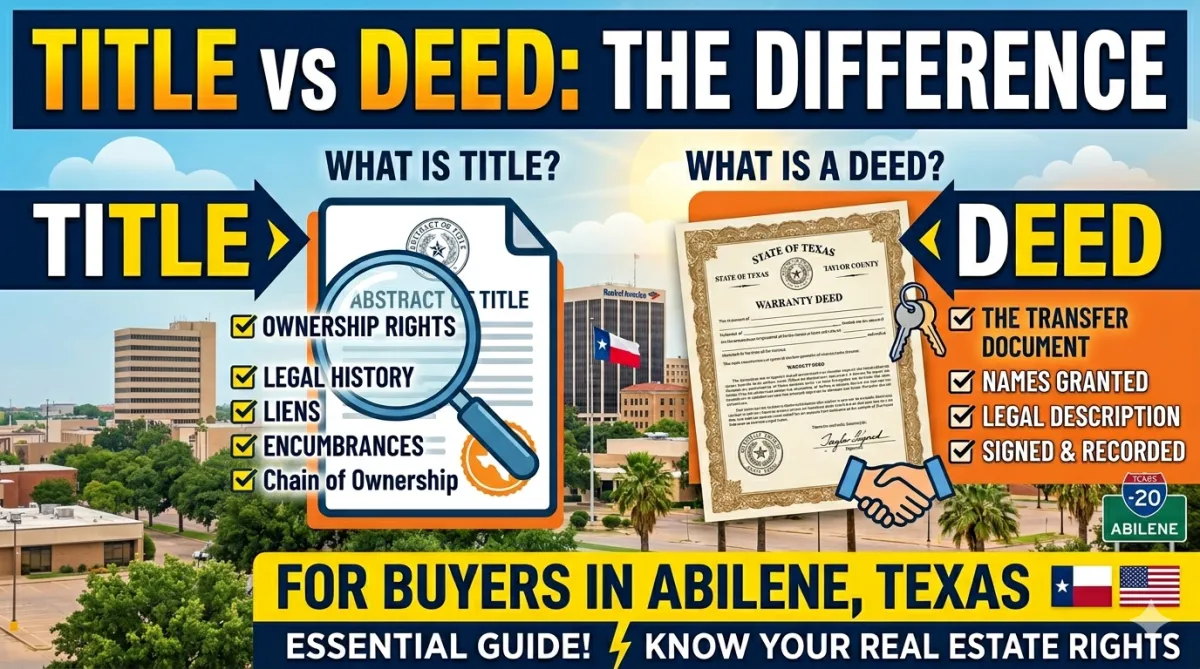
Title vs Deed: What’s the Difference (Especially for Buyers in Abilene, Texas)
When buying a home, especially in a growing market like Abilene, Texas, two terms often get mixed up—title and deed. They sound similar, but they serve very different legal purposes in a real estate transaction. Understanding the difference can help you avoid confusion, protect your ownership rights, and move through the home buying process with more confidence.
What Is a Title?
A title is not a physical document. Instead, it represents your legal rights to own, use, and control a property. Think of it as the concept of ownership.
When you “have the title,” it means:
You have the legal right to own the property
You can transfer ownership (sell or pass it on)
You are recognized by law as the rightful owner
However, the title can also have issues or “clouds”, such as unpaid taxes, liens, or ownership disputes. That’s why title searches and title insurance are so important in Texas real estate transactions.
What Is a Deed?
A deed, on the other hand, is the physical legal document that transfers ownership from one party to another.
In simple terms:
The deed is the paper that proves the transfer
It includes names of buyer and seller
It describes the property
It is recorded in public records in the county
In Abilene, Texas, deeds are typically recorded at the Taylor County Clerk’s office after closing. Once recorded, the buyer officially becomes the legal owner.
Title vs Deed: The Key Difference
Here’s the simplest way to understand it:
Title = ownership rights (concept of who owns it)
Deed = legal document transferring ownership
You can think of it this way:
The title is what you have
The deed is what you receive
Even after closing, your deed proves ownership transfer, while your title reflects your legal rights and standing as the owner.
Why This Matters in Abilene, Texas Real Estate
In markets like Abilene, Texas, where homes often move quickly and buyers compete for good properties, understanding title and deed becomes especially important.
Before closing, a title company will:
Run a title search
Check for liens or ownership issues
Issue title insurance for protection
Meanwhile, the deed ensures:
Ownership is properly transferred
The transaction is legally recorded
Your name is officially on public record
Skipping understanding these steps can lead to confusion about what you actually own versus what you’re legally entitled to.
Common Misconceptions
Many buyers assume:
“Once I get the deed, I automatically own a clean title” → Not always true
“Title and deed are the same thing” → They are related but different
“The lender handles everything, so I don’t need to understand it” → Understanding helps you avoid delays and surprises
Before getting to closing, understanding financing readiness plays a major role in how smoothly the entire process goes. Many buyers who take time to prepare early often avoid delays and surprises later on. A helpful breakdown of this can be seen in how waiting too long to speak with a lender can limit options and slow down progress when the right home becomes available Is It Too Early to Talk to a Lender? Where early lender conversations can strengthen your position and make the buying process more efficient.
How Title and Deed Connect to Your Closing Costs and Timeline
Title and deed issues also connect directly to your closing experience. For example, buyers in Texas often underestimate early expenses such as inspections, appraisal fees, and lender requirements.
You can better prepare by understanding the First Costs After Offer Is Accepted so you know what to expect once your offer is accepted and can move through the early stages of the transaction with fewer surprises and a clearer understanding of the expenses involved right after going under contract.
It’s also important to understand timing. The closing process in Texas can vary depending on financing, title clearance, and negotiations, and how long it takes to close on a house in Texas depends on these moving parts that can either speed up or delay your transaction.
Watch the Video: Title vs Deed, What’s the Difference?
Before wrapping up, it helps to see these concepts in action. Watching short educational videos about title, deed, and the home buying process can make everything much clearer—especially how lenders, title companies, and closing timelines all work together in real transactions.
Understanding these steps visually can help you avoid confusion and feel more confident when reviewing documents during your own home purchase in Abilene, Texas.
FAQs
1. Do I get the title or the deed when I buy a house?
You receive the deed, which is then recorded to show your ownership. The title refers to your legal ownership rights.
2. Can I own a home without a deed?
No. The deed is the legal document that transfers ownership and is recorded in public records.
3. What happens if there is a problem with the title?
Issues like liens or disputes must be resolved before closing, often through a title company.
4. Who handles the deed in Texas?
A title company typically prepares and records the deed after closing in the county where the property is located.
5. Is title insurance necessary?
Yes, it protects buyers and lenders from future claims or issues tied to the property’s ownership history.